• Skip to primary navigation
  • Skip to main content
  • Skip to primary sidebar
  • Skip to footer
  • About TronWeekly
  • Write for us
  • Terms and Conditions
  • Privacy Policy
  • Disclaimer
  • Contact
  • All Posts
  • Advertise

TronWeekly

Crypto World News

  • Home
  • Latest News
  • Opinion
    • Education
    • Best TRON Wallets
    • Beginner’s guide to TRON
    • Tron Tokens
    • Market Analysis
  • Industry
    • Tron Exchange
    • Project Review
  • Press Release
  • Bitcoin (BTC)
  • Ripple (XRP)
  • Advertise
  • About TronWeekly
    • The Team
    • Editorial Policy
    • Write for us
    • Privacy Policy
    • Disclaimer
    • Terms and Conditions
    • Contact
You are here: Home / All Posts

All Posts

Goldman Sachs Predicts Gold Price Recovery as Central Banks Increase Buying Activity

By Tina Fatima | Edited By Ammar Raza,May 18, 2026, 7:30 PM

Goldman Sachs expects central banks to increase gold purchases through 2026, strengthening long-term demand and supporting a potential price recovery by year-end. Rising geopolitical tensions and diversification strategies continue to keep gold attractive for official reserves despite inflation concerns and pressure from higher interest rates.

Central Banks Strengthen Gold Demand Outlook

Goldman Sachs expects central banks to increase gold purchases in the coming months, creating stronger support for bullion prices by the end of the year.

The bank said official-sector demand remains firm despite recent market pressure caused by rising inflation and geopolitical tensions. Analysts Lina Thomas and Daan Struyven stated that central-bank purchases could average 60 tons per month throughout 2026.

Their updated estimates also showed that the 12-month moving average for buying activity reached 50 tons in March. Earlier calculations had placed the figure much lower at 29 tons.

Goldman expects higher gold-buying.
Source: @CryptoNewsHntrs

The bank revised its framework for measuring gold accumulation after changes in global trade flows reduced the accuracy of previous tracking methods.

Goldman noted that older assumptions based on UK trade data no longer fully reflected current buying patterns among global central banks.

Also Read: FLOW Price Eyes $0.0466 as Bullish Structure Signals Liquidity Move

Gold Remains Key Reserve Asset Globally

The report highlighted growing interest in diversification strategies. Central banks continue to treat gold as a key reserve asset during periods of economic and geopolitical uncertainty. Recent developments in global politics have further strengthened that trend.

Gold prices have struggled since the start of the conflict in the Middle East. Rising energy costs pushed inflation pressures higher across global markets and reduced expectations for interest-rate cuts from central banks.

A change in the way markets valued cash created a fall in the prices of bonds worldwide and sparked another round of pressure on non-interest-bearing investments such as gold.

Investors remained cautious amid efforts that centered more on combating inflation than stimulating the economy.

Goldman Sachs Maintains Bullish Long-Term Gold Outlook

Despite near-term weakness, Goldman Sachs held firm in its optimistic outlook in the long run. It maintained its expectation that gold prices would reach the $5,400 range before the end of the year.

Other prominent firms like UBS Group AG and ANZ Group Holdings Limited have also expressed a positive outlook towards gold. Gold spot prices were hovering at over $4,545 per ounce, having flirted with all-time highs close to $5,600 in January.

The latest report by Goldman Sachs follows the impressive quarterly report released by the World Gold Council. According to the World Gold Council, central banks purchased 244 tons of gold in the first quarter, compared to the 208 tons acquired in the previous quarter.

Nevertheless, China retained its position as one of the top purchasers in the market. The People’s Bank of China purchased another 260,000 troy ounces of gold in April, marking a continuous streak of acquisitions lasting 18 months, mirroring the streak initiated in late 2022.

Also Read: Saylor Signals Strategy Bitcoin Buy as STRC Vote Nears

Filed Under: Cryptocurrency News

US Debt Crisis: China Dumps $693 Billion Bonds

By Aishwarya shashikumar | Edited By Ammar Raza,May 18, 2026, 6:59 PM

The warning signs around US Debt are getting harder to ignore. What once looked like a slow shift is now happening in plain sight. The world’s largest foreign holders of American debt are backing away. And the impact is spreading across the entire economy.

China’s holdings of US Treasury bonds have dropped to $693 billion. That is down from more than $1.3 trillion a decade ago. The decline takes China’s position back to levels last seen during the 2008 financial crisis. Japan is also pulling back. Japanese investors recently sold US bonds at the fastest pace in four years.

This matters because the United States depends on buyers to fund its massive borrowing. The country is currently running an annual deficit of roughly $2 trillion. That debt needs constant demand. When major buyers step away, the government must make bonds more attractive.

Also Read: US Treasury Targets Iran-Linked Crypto Wallets, Freezes $344M in Digital Assets

US Debt Is Driving Interest Rates Higher

The result is already visible in the bond market. The 30-year Treasury yield has climbed to 5.1%. That is one of the highest levels seen in years.

Higher Treasury yields ripple through the entire economy. Mortgage rates rise. Car loans become more expensive. Credit card interest rates climb higher. Borrowing money suddenly costs far more for ordinary Americans.

For decades, foreign governments helped absorb America’s growing debt pile. They bought Treasury bonds because the US dollar was seen as stable and reliable. But confidence appears to be changing.

Source: X

US Debt Is Becoming America’s Biggest Pressure Point

The biggest risk is not just the size of the US debt. It is the shrinking pool of buyers willing to finance it.

If foreign demand continues to weaken, the US government may need to offer even higher yields to attract investors. That creates a dangerous cycle. Rising yields increase borrowing costs for the government itself, making deficits even larger over time.

The people who once funded US debt are slowly walking away. Now the burden is shifting inward. Every American who borrows money is beginning to feel the cost of that change.

Also Read: Bitcoin Rises On US Treasury Liquidity, Not Fed Policy

Filed Under: Cryptocurrency News, World

Capital B Acquires 192 BTC for $15.2M, Expands Bitcoin Treasury to 3,135 BTC

By Yahya Raza Sherazi | Edited By Ammar Raza,May 18, 2026, 6:56 PM

Capital B bought 192 BTC for €13 million on Monday, expanding its Bitcoin treasury after new capital raises. The France-listed company said the purchase lifted total holdings to 3,135 BTC and followed its latest fundraising plan, announced last week.

According to the report, the company said that it raised approximately €17.15 million through three separate capital increases. That amount was equal to nearly $20 million. Under its stated treasury strategy, Capital B said the funds were used to buy the bitcoins.

Also Read: Saylor Signals Strategy Bitcoin Buy as STRC Vote Nears

Capital B Bitcoin Treasury Reaches 3,135 BTC

Following the new agreement, Capital B now has a total stake of 3,135 BTC. The company said it has created a Bitcoin treasury that costs approximately $330 million to purchase. That implies an average acquisition price of $105,270 per Bitcoin.

Source: X

Most of the funding came through a private placement. Capital B reported it raised almost €15.2 million from over 23 million ABSA shares. Each share was issued with four attached share subscription warrants.

The company also announced two smaller rounds of financing. It raised €850,000 under a capital increase agreement with TOBAM on an ATM basis. Another €1.1 million was raised through share subscription warrants subscribed to by Back.

Capital B’s latest purchase came as other public companies also added Bitcoin. Strategy, the largest publicly traded holder, announced a $43 million purchase last Monday. On May 4, Strive purchased $33 million worth of BTC. The Smarter Web Company also bought $4.9 million worth of Bitcoins.

The activity demonstrates that some public companies are still in favor of the Bitcoin treasury approach. The strategy is still vulnerable to price fluctuations. Bitcoin remains below the all-time high it recorded in October 2025.

Capital B Ranks as Europe’s Second-Largest BTC Holder

Capital B shares fell after the announcement. The price fell by 2.4% on Monday and currently sits at around €0.61. Yahoo Finance data shows that the shares are down 18% year to date.

Capital B shares have lost more than 68.57% over the past year. The fall shows that the company’s market performance remains weak despite its growing Bitcoin treasury position.

As per BitcoinTreasuries’ data, Capital B is the 25th largest listed holder of Bitcoin by reserves. It is also the second largest Bitcoin treasury firm in Europe. 

Other companies are taking steps to limit balance sheet risk from Bitcoin exposure. Nasdaq-listed Nakamoto announced an actively managed Bitcoin derivatives program on April 24. The program is designed to generate consistent income from volatility and to offset some of the risk in the corporate portfolio.

Nakamoto also reported a Bitcoin sale in a March 30 filing. The company said it sold 284 BTC, worth about $20 million at the time. In February, Genius Group sold its remaining 84 BTC for about $5.7 million to repay an $8.5 million debt obligation.

Also Read: Iran Launches Hormuz Safe Platform Settling Maritime Insurance in Bitcoin

Filed Under: Cryptocurrency News, Bitcoin (BTC)

BNB ETF Nears Launch After Strong Filing of Amended S-1 prospectuses with SEC

By Aishwarya shashikumar | Edited By Sahana Kiran,May 18, 2026, 4:30 PM

The race for the first spot BNB ETF in the United States is moving faster. Asset managers are now taking another step toward bringing Binance Coin to Wall Street.

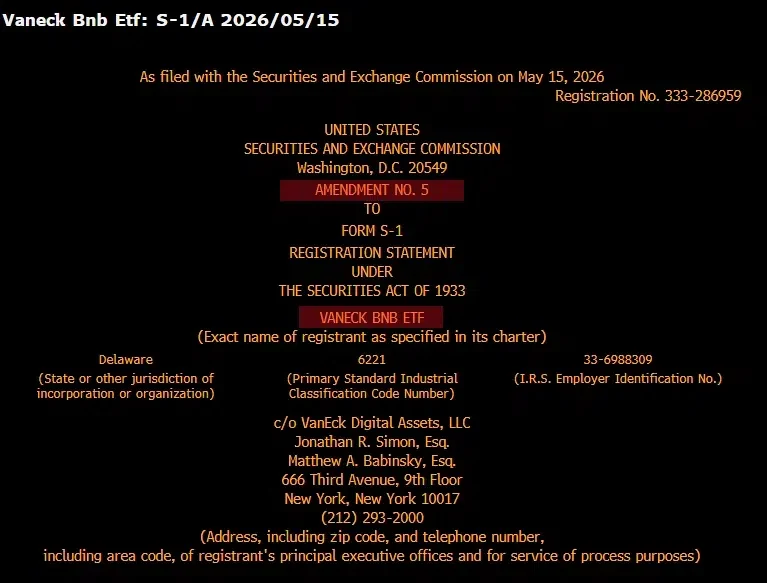
VanEck and Grayscale both filed amended S-1 registration statements with the U.S. Securities and Exchange Commission. The updates came after ongoing discussions with regulators. Bloomberg ETF analyst James Seyffart said the new filings suggest a launch could happen sooner than expected.

VanEck is now on its fifth amendment. Grayscale, meanwhile, has filed its second amendment since joining the race earlier this year. The filings show both firms are actively responding to SEC feedback as the approval process continues.

Source: X

Also Read: Grayscale and VanEck Update BNB ETF Filings as SEC Review Intensifies

BNB ETF Filings Show Regulatory Progress

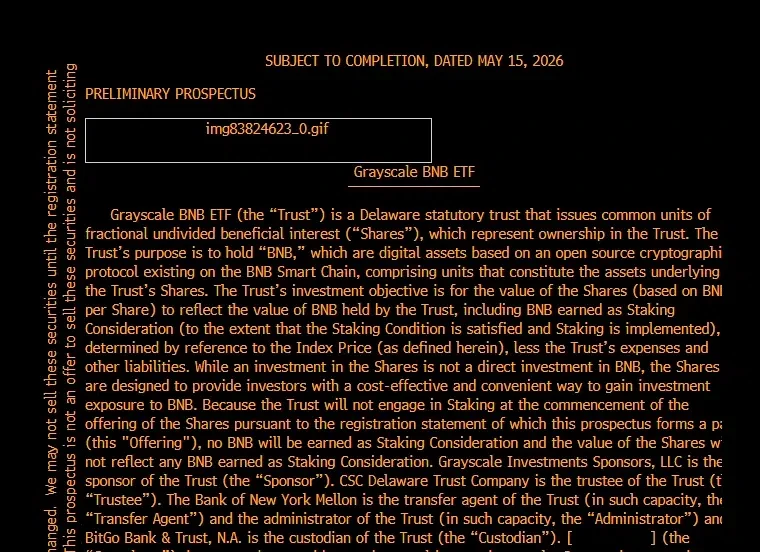
Grayscale’s proposal would list on Nasdaq under the ticker GBNB. The filing explains that authorized participants may create or redeem shares either with cash or directly with BNB tokens. Transactions would happen in baskets of 10,000 shares.

Source: X

The structure mirrors what the market has already seen with spot Bitcoin and Ethereum ETFs. Still, one detail stands out. Neither filing includes staking.

That omission matters. Staking remains one of the biggest regulatory gray areas in crypto ETFs. Fund managers are still waiting to see how the SEC handles yield-bearing crypto products after the launch of staking-linked Ethereum and Hyperliquid funds.

VanEck first filed for a spot BNB ETF in May 2025. Grayscale followed in January 2026, aiming to convert its private BNB Trust into a publicly traded ETF.

Source: X

BNB ETF Could Expand Institutional Crypto Access

BNB is the native token of the BNB Chain and plays a central role in the Binance ecosystem. It is used for trading fee discounts, token launches, and governance functions across the network.

At the time of writing, BNB traded near $653 after falling more than 1% over the past 24 hours. Retail sentiment on Stocktwits remained bearish, while overall trader discussion stayed low.

Even so, BNB continues to hold a market capitalization above $88 billion. That keeps it behind only Bitcoin and Ethereum among digital assets.

If approved, a spot BNB ETF could open the door for wider institutional exposure to one of crypto’s biggest networks.

Also Read: Grayscale Submits BNB ETF Proposal Amid Rising U.S. ETF Activity

Filed Under: Cryptocurrency News, World

XRP ETF Developments Boost Adoption in Japan and South Korea Markets

By Bena Ilyas | Edited By Sahana Kiran,May 18, 2026, 4:00 PM

XRP ETF is getting a lot of traction in Japan and South Korea. Discussions about an XRP ETF are becoming more common, along with the increased adoption of other financial instruments in the market. As stated by Fiona Murray, this has roots that go back many years, when people had to look for other ways to earn money because the rate of interest was too low.

🇯🇵🇰🇷Ripple's APAC VP: "Low interest rate economies push retail into ALTERNATIVE ASSETS

XRP is becoming their STORE OF VALUE.🤯

0% savings rate did this. $XRP https://t.co/gXfcAe5tld pic.twitter.com/Vv6YAdqraw

— Xaif Crypto (@Xaif_Crypto) May 17, 2026

XRP ETF Growth and Institutional Interest in Asia

Interest in the XRP ETF is also tied to growing institutional interest in Japan’s financial markets via companies such as SBI Holdings and moves involving the Tokyo Stock Exchange. According to reports by the crypto market expert Xaif Crypto, talks surrounding the concept of an XRP ETF, along with Bitcoin-related instruments, can bring substantial investment if approved.

Crypto assets linked investment trusts
Source: Xaif Crypto’s X Post

This is not an isolated phenomenon. The Japanese economy, characterized by very low and even negative interest rates, provided a setting where individuals became accustomed to shifting their funds from traditional savings to more lucrative areas. This practice then spread to foreign exchange trading and now digital assets, where the creation of an XRP ETF is considered a legitimate possibility.

According to Murray, most retailers in Japan and Korea are currently treating XRP as an alternative store-of-value asset while at the same time following the story regarding the XRP ETF. Murray explained that this is indicative of a change in the way that investors think about financial matters due to slow growth and poor returns.

Also Read | Zcash Price Analysis Shows 70% Rally Strength and Next Move Levels

Why XRP Is Surging in Asia Amid ETF Talks?

One more major factor that has been driving the popularity of XRP includes its usefulness for cross-border payments. Japan and South Korea have good trading ties, and using XRP for making payments will prove to be more convenient since it settles quickly and also reduces transaction costs. With the talks regarding an XRP ETF gaining traction, interest in the coin has also increased.

XRP is not seen merely as an intangible currency anymore for many people in Asia. With the rising interest in the XRP ETF idea, there is a growing realization that it forms part of a broader financial transformation that has been influenced by economic trends for decades.

Also Read | ARB Price Holds Key Support as Descending Channel Signals Reversal to $0.92

Filed Under: Cryptocurrency News, Ripple (XRP)

Microsoft AI Warns Massive 18-Month Job Automation Shock

By Aishwarya shashikumar | Edited By Sahana Kiran,May 18, 2026, 3:30 PM

Artificial intelligence is not really a faraway idea anymore, according to the Microsoft AI CEO. It’s now sitting inside offices, on laptops, and in daily workflows. Companies use it to write code, answer emails, work through data, and run project work. The speed is quicker than a lot of folks thought it would be, and in some ways even quicker than that.

Now, the warning from Microsoft AI chief Mustafa Suleyman has pushed the debate further. Speaking to the Financial Times, Suleyman said AI could automate most white-collar jobs within the next 12 to 18 months. He argued that modern AI systems are closing in on “human-level performance on most professional tasks.”

Microsoft AI chief Mustafa Suleyman. Source: X

This claim actually matters because it comes from one of the biggest players in this whole AI race. Microsoft has poured billions into artificial intelligence. They’re basically viewing AI as the next huge platform change after the internet and even smartphones.

Microsoft AI Sees White-Collar Disruption Ahead

Suleyman believes computer-based jobs face the highest risk. He gestured toward professions like law, accounting, marketing, and project management. Those areas depend a lot on information handling, pattern seeing, and everyday decision-making. AI already performs many of these tasks at high speed.

Microsoft AI also believes that stronger computing power is accelerating the shift. Models are becoming faster, smarter, and more capable of solving complex problems. Coding is one example. Many software engineers already rely on AI assistants to write and debug programs.

Source: X

Suleyman said this transformation will not stop at repetitive tasks. Over time, AI could move deeper into complex professional work once handled only by trained experts.

Also Read: INTC Jumps 15% as Microsoft Picks Intel for Next-Gen AI Chips

Microsoft AI Pushes for Self-Sufficiency

Microsoft AI is also focused on building its own advanced foundation models. Suleyman previously said the technology is too important for Microsoft to depend entirely on outside systems.

“This, after all, is the most important technology of our time,” he said while discussing Microsoft’s AI ambitions.

The shift is already reshaping the company itself. Last year, Microsoft laid off 15,000 employees. In July 2025, CEO Satya Nadella said the company must “reimagine our mission for a new era.” That new era may arrive sooner than many workers expect.

Also Read: Indian Police Crack Down on Microsoft Impersonation Scam, 21 Arrested

Filed Under: World

Strategy Bitcoin Purchase Adds 24,869 BTC, Holdings Reach 843,738 BTC

By Yahya Raza Sherazi | Edited By Sahana Kiran,May 18, 2026, 3:00 PM

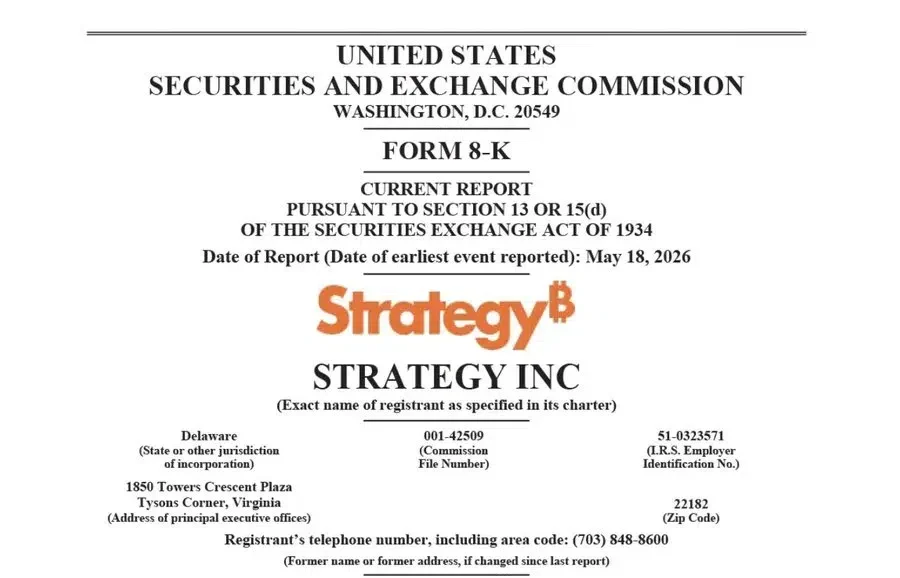
Strategy added 24,869 BTC to its treasury for about $2.01 billion, expanding its reserve position again. The Strategy Bitcoin purchase was announced on May 18, 2026, and was made at an average price of about $80,985 per Bitcoin.

The latest purchase raised Strategy’s total holdings to 843,738 BTC as of May 17, 2026. The company’s cumulative Bitcoin investment now stands at about $63.87 billion.

Source: Strategy

Also Read: Saylor Signals Strategy Bitcoin Buy as STRC Vote Nears

Strategy Bitcoin Purchase Highlights STRC Funding Plan

According to Strategy, its average purchase price is roughly $75,700 per BTC. The trend of the figures clearly indicates that the company continues to pursue Bitcoin as a key holding asset in its treasury.

The purchase of the Strategy Bitcoin was financed using various tools of the capital market. These included common stock offerings, STRC preferred shares, and other financing arrangements utilized by the company.

Executive Chairman Michael Saylor announced the acquisition on X. He termed the move a part of a broader “Cambrian explosion” in digital finance.

Saylor also connected Strategy’s model with the concept of programmable money with Bitcoin. The company has consistently shown itself to be a major player in corporate bitcoin holdings.

Since it started accepting BTC as its main reserve asset in 2020, Strategy has accumulated over 800,000 BTC. This most recent transaction is part of a long string of purchases in various market cycles.

BTC Yield Remains Key as MSTR Stock Falls

The Strategy Bitcoin purchase coincides with the price of Bitcoin approaching the $78,000 level. Corporate and sovereign adoption stories still fuel market conversation.

Regulatory progress has also supported the wider digital asset debate. In the United States, the bipartisan CLARITY Act has been seen as a step towards more transparent crypto regulations.

Strategy continues to highlight BTC yield as a key company metric. This measure is based on the ratio of bitcoin accumulated to the number of shares outstanding.

The company’s BTC Yield YTD is at 9.4% as of the latest report. It indicates the growth of its Bitcoin balance over its equity base using the metric.

Strategy’s shares declined as the company kept on acquiring BTC. According to Yahoo Finance data, MSTR closed at $177.42 on Friday, May 15, 2026, down about 5.4% from the prior Friday’s $187.59 close.

Source: Yahoo Finance

Strategy Links STRC to Bitcoin Treasury Growth

The Strategy Bitcoin purchase also brought renewed attention to STRC. The Stretch perpetual preferred stock (PS) program is now an important component of Strategy’s capital-raising strategy.

Saylor has referred to STRC as a “killer app” for productive money. It enables Bitcoin accumulation with minimal common share dilution, he said.

Additionally, Strategy revealed that it will be selling some of its BTC from the treasury to fund its dividends. Saylor explained that it was not a change in Bitcoin conviction, but rather tactical rebalancing.

The company also announced a $1.5 billion debt repurchase plan. The program is aimed at the best convertible notes and other liabilities.

The move is designed to make the balance sheet more flexible, Strategy said. It also aims to lower the costs of future interests and facilitate ongoing Bitcoin growth.

The Strategy Bitcoin purchase strengthens the company’s aggressive treasury position. It also maintains a focus on STRC demand, BTC yield, debt reduction, and the potential risks associated with leveraging capital markets to grow Bitcoin investments.

Also Read: Tom Lee Says Ethereum Price Outlook Can Strengthen Through 2026

Filed Under: Cryptocurrency News, Bitcoin (BTC)

Tom Lee Says Ethereum Price Outlook Can Strengthen Through 2026

By Yahya Raza Sherazi | Edited By Sahana Kiran,May 18, 2026, 12:00 PM

The Ethereum price outlook remains under pressure as rising oil prices weigh on risk assets and weaken trader appetite for ETH. In a post on X, Tom Lee said oil remains the main short-term obstacle, although tokenization and agentic AI could support Ethereum through 2026.

Lee put macro pressure at the center of the ongoing ETH debate. Rising energy prices typically are inflationary. That could compel central banks to maintain tighter financial conditions for a longer period.

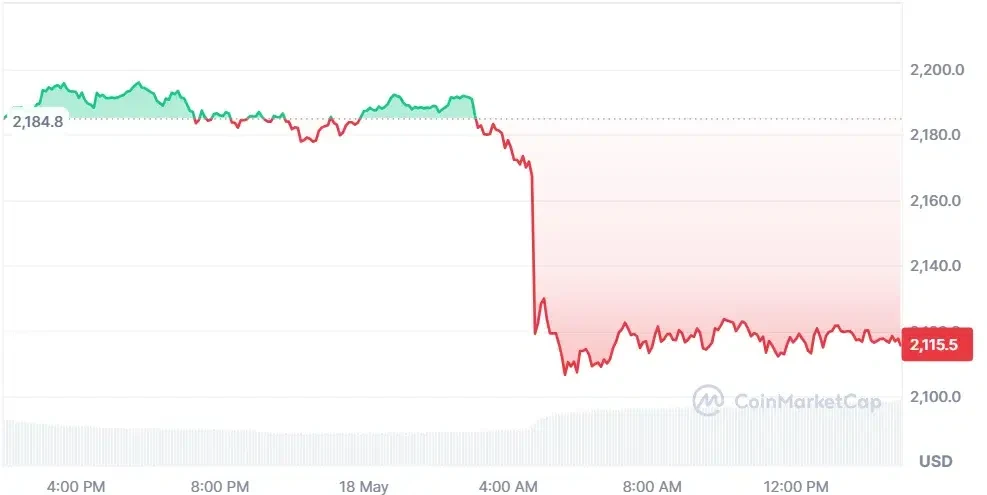
As of writing, ETH is trading at $2,117, down 3.36% in the past day. The 24-hour trading volume stood at $13.47 billion, while its market cap is at $255.67 billion.

Source: CoinMarketCap

Also Read: Saylor Signals Strategy Bitcoin Buy as STRC Vote Nears
Ethereum Price Outlook Holds Focus on Tokenization

This situation often exerts pressure on technology stocks and digital assets. ETH is considered a growth-oriented crypto asset. When oil prices rise, investors often trim positions in volatile markets.

🧵
1/
If one is wondering why Ethereum $ETH has been under selling pressure:

– to me, rising oil prices is the biggest headwind
– ETH inverse correlation to oil is the highest ever pic.twitter.com/G5Uw0wbtJP

— Thomas (Tom) Lee (not drummer) FundstratDirect.com (@fundstrat) May 18, 2026

However, this continued short-term pressure has not diminished the longer-term bullish case for Ethereum, according to Lee. Investors are still monitoring two key drivers for growth. These include tokenization and agentic AI crypto systems.

The concept of tokenization is a predominant trend in the digital asset landscape. Financial firms are exploring blockchain systems for real-world assets. Ethereum is significant in that trend due to its developer activity and smart contract network.

This trend could improve the Ethereum price outlook if more tokenized assets move on-chain. More activity can lead to greater network demand and volume of transactions. It could also introduce more robust institutional involvement in Ethereum.

Lee expects tokenization to become a bigger force in the market over time. If more assets migrate onto blockchain networks, settlements and application activity could likewise accrue more to Ethereum. That view aligns with his broader optimism for ETH.

Artificial intelligence is also another area of growing demand for Ethereum. Developers are creating systems that allow AI agents to interact with decentralized applications directly. These tools can be used in the processing of payments and data access, and to automate financial tasks.

Institutional Interest Supports Ethereum Despite Oil Pressure

This emerging sector could also benefit Ethereum because smart contracts allow programmed transactions. AI agents may need blockchain networks to complete actions without manual control. That use case adds support to the Ethereum price outlook beyond short-term price swings.

Institutional interest also remains part of the broader Ethereum market outlook. Long-term market interest remains strong with spot ETFs, tokenization initiatives, and AI-powered blockchain applications. These factors help balance the pressure from oil prices.

The Ethereum price outlook remains mixed in the near term. If fears of inflation grow, then rising prices for oil will slow momentum. But the trend towards tokenization and agentic AI is still ongoing despite the weaker market tone.

ETH continues to be vulnerable to macro volatility and liquidity risks. Traders may stay cautious while oil prices remain elevated. However, the structural growth themes may assist Ethereum in the next market phase, as mentioned by Lee.

The Ethereum price outlook will therefore depend on both macro pressure and network adoption. Oil is still the major hurdle in the near term. But the long-term forces that may continue to influence demand for Ethereum in 2026 are tokenization and agentic AI.

Also Read: Ethereum Price Analysis: Will ETH Hold $2,170 Support?

Filed Under: Cryptocurrency News, Ethereum (ETH)

Iran Launches Hormuz Safe Platform Settling Maritime Insurance in Bitcoin

By Bena Ilyas | Edited By Sahana Kiran,May 18, 2026, 11:30 AM

Iran has launched Hormuz Safe Platform, a state-backed digital maritime insurance platform that provides settlement via Bitcoin and other cryptocurrencies for tankers and vessels passing through the Persian Gulf and Strait of Hormuz regions. Marking a significant shift in how shipping risk coverage is structured within a strategically critical waterway region.

The Strait of Hormuz is responsible for supplying nearly one-fifth of the world’s daily oil output and is one of the most crucial maritime routes. Up until now, maritime insurance policies for tankers and other ships sailing through the Strait were provided by banks from Western countries, which Iran is mostly locked out of because of economic sanctions. 

A post by Crypto Rover claims Iran has launched “Hormuz Safe Platform,” a maritime insurance platform for ships crossing the Strait of Hormuz, with payments reportedly settled in Bitcoin. However, by using blockchain technology, Hormuz Safe Platform can settle transactions directly in Bitcoin and other cryptocurrencies instead of SWIFT, thus creating an alternative maritime insurance system not relying on conventional global financial mechanisms for international shipping.

Iran’s Hormuz Safe platform
Source: Crypto Rover’s X Post

Also Read | Saylor Signals Strategy Bitcoin Buy as STRC Vote Nears
Hormuz Safe Platform and Sanctions Evasion Through Blockchain Settlement

According to the report, Hormuz Safe has the potential to generate revenues of up to $10 billion if it manages to capture a large market share from Persian Gulf maritime insurance policies. It seems to be both an innovative step by the Iranian authorities and a tool for expanding state-controlled services.

However, there is also a problem with international acceptance of such a service. Insurance policies provided by a state-backed company of Iran will hardly be recognized at such international ports as Rotterdam or Singapore, where insurance compliance relies greatly on underwriting and verification provided by Western companies. Therefore, global enforcement risk remains high.

Limited Adoption and Sanctions Exposure Risks

Initial customer base for Hormuz Safe Platform is expected to remain limited, primarily consisting of Iranian-flagged vessels, shipping operators in jurisdictions with reduced exposure to United States financial pressure, and entities already operating within sanctions gray trade environments across regional maritime routes, especially in Persian Gulf shipping corridors, where operations continue.

Such a development represents Iran’s attempts to incorporate cryptocurrencies into its national economy in order to avoid any sanctions.

Also Read | ARB Price Holds Key Support as Descending Channel Signals Reversal to $0.92

Filed Under: Cryptocurrency News

Ethereum Exploit: Verus-Ethereum Bridge Suffers $11.4 Million Hack

By Ananthyka J | Edited By Sahana Kiran,May 18, 2026, 11:00 AM

According to blockchain security firm PeckShieldAlert, the Verus-Ethereum bridge, a cross-chain interoperability bridge connecting Verus and Ethereum, was exploited for approximately $11.4 million. This Ethereum exploit points to continuing weaknesses in DeFi bridge infrastructure and renews concerns about asset safety in cross-chain operations.

Breakdown of the Exploit

As PeckShieldAlert, the attacker withdrew 103.6 $tBTC 1 625 $ETH, and 147,000 $USDC from the Verus-Ethereum bridge. Post-attack, the funds were put through swaps into 5,402 $ETH.

Verus and Ethereum exploit
Source: verus.io

All of the funds then sat together, moved to a singular wallet address, making it more traceable yet demonstrating how quickly exploiters are able to traverse between chains with digital assets.

Also Read: Ethereum Price Prediction Shows Over 110% Upside Toward $4,800 Breakout Zone

Funding Trail and Anonymity Tools

The Ethereum exploit was funded with 1 $ETH from Tornado Cash. Mixers provide privacy but remain under regulatory scrutiny. This case fuels the ongoing debate on balancing privacy with compliance in crypto. The attack shows how fast stolen funds can move across chains. It highlights the need for stronger bridge security measures. Trust in DeFi depends on balancing privacy and safety.

Attacker EOA: 0x5aBb91B9c01A5Ed3aE762d32B236595B459D5777
Drainer wallet (still holding the funds): 0x65Cb8b128Bf6e690761044CCECA422bb239C25F9

Exploit tx: https://t.co/OqBh2alXGc
Bridge contract: https://t.co/EN3LkDfId9

— Blockaid (@blockaid_) May 18, 2026

Developers and protocols now face pressure to implement transparent safeguards without undermining decentralization. The Verus Ethereum exploit adds urgency to building cross-chain infrastructure that can resist sophisticated attacks while preserving user autonomy.

Also Read: Harvard Endowment Exits Ethereum ETF, Reduces IBIT Holdings by 43%

Bridge Security Challenges Persist

Cross-chain bridges are still very lucrative targets for attackers due to their provision of locked liquidity as well as complex smart contract architecture. The Verus Ethereum exploit is very representative of a series of bridge hacks that demand developers enhance auditing, formal verification, and real-time monitoring.

For the crypto industry, these attacks bear consequences on trust and underline the importance of implementing resilient security structures while maintaining the same degree of decentralization.

Also Read: Ethereum Price Analysis: Will ETH Hold $2,170 Support?

Filed Under: Ethereum (ETH), Cryptocurrency News

  • « Go to Previous Page
  • Page 1
  • Interim pages omitted …
  • Page 10
  • Page 11
  • Page 12
  • Page 13
  • Page 14
  • Interim pages omitted …
  • Page 3615
  • Go to Next Page »

Primary Sidebar

Recent Posts

  • Boerse Stuttgart, Societe Generale & flatexDEGIRO Partner for Tokenized Securities Platform May 22, 2026
  • JASMY Price Breakout Above Weekly High Could Trigger Strong Rally to $0.27 May 22, 2026
  • Why RLUSD Stablecoin Cannot Replace XRP in Digital Asset Routing Explained May 21, 2026
  • Circle-Backed QCAD StableFX Enables Real-Time Institutional FX Settlement May 21, 2026
  • Avalanche Stablecoin Partnerships Fuel Growth as AVAX Eyes $13.52 Level May 21, 2026

Footer

News

  • Latest News
  • Altcoin News
  • Bitcoin (BTC)
  • Blockchain
  • Tron (TRX)
  • World

Digest

  • Meet the Founder
  • Price Winning Article
  • DeFi
  • Cyber Security
  • Crypto Scam

Industry

  • Project Review
  • Technology
  • Fintech
  • Tron Exchange
  • New in Town

Tron Universe

  • Event and Tron Parties
  • New in Town
  • Tron Tokens

FOLLOW US

  • Facebook
  • Telegram
  • Twitter
  • Linkedin

Editorial Policy | Privacy Policy | Disclaimer | Terms and Conditions | Masthead

Copyright © 2026 · Tron Weekly. All Rights Reserved. NOTE: Tron Weekly is an independent crypto news site that adheres to the strict journalism policy anchored on transparency, trust, and objectivity, we have no affiliation with the TRON Foundation, its founder Justin Sun or any other cryptocurrency firm.