• Skip to primary navigation
  • Skip to main content
  • Skip to primary sidebar
  • Skip to footer
  • About TronWeekly
  • Write for us
  • Terms and Conditions
  • Privacy Policy
  • Disclaimer
  • Contact
  • All Posts
  • Advertise

TronWeekly

Crypto World News

  • Home
  • Latest News
  • Opinion
    • Education
    • Best TRON Wallets
    • Beginner’s guide to TRON
    • Tron Tokens
    • Market Analysis
  • Industry
    • Tron Exchange
    • Project Review
  • Press Release
  • Bitcoin (BTC)
  • Ripple (XRP)
  • Advertise
  • About TronWeekly
    • The Team
    • Editorial Policy
    • Write for us
    • Privacy Policy
    • Disclaimer
    • Terms and Conditions
    • Contact
You are here: Home / All Posts

All Posts

ECB Stablecoin Warning: Schnabel Backs Digital Euro to Counter Risks

By Yahya Raza Sherazi | Edited By Ammar Raza,June 1, 2026, 3:00 PM

The European Central Bank issued a fresh ECB stablecoin warning on Monday. It said rapid token growth could pressure banks and raise run risks. The central bank also linked wider adoption to deeper global reliance on the U.S. dollar system.

According to an official statement, ECB Executive Board Member Isabel Schnabel made the remarks in Seoul. She spoke at the 2026 Bank of Korea International Conference. The event took place on 1 June 2026.

Also Read: Coinbase India Launches INR Rails With IMPS Support 2026

ECB Stablecoin Warning Highlights Bank Funding Risks

According to the ECB, stablecoins are now more similar to previous private money forms. Schnabel likened their growth to money market funds. She said these products can be beneficial and need more public oversight now.

The ECB stablecoin warning was the first to address financial stability. Stablecoins are private digital tokens usually pegged to fiat currencies. They might hold government securities, deposits at banks, cash, or other assets.

The global stablecoin market is close to $300 billion, and crypto trading remains their primary use case, Schnabel said. That market is dominated by dollar-backed tokens. Stablecoins Tether and USD Coin make up approximately 90% of the total stablecoin value.

Bank funding risks were also a part of the ECB stablecoin warning. Customers can transfer deposits from banks to stablecoins, Schnabel said. Such a change would make that funding source less strong for traditional lenders.

This would allow banks to depend more on wholesale markets. This could increase the concentration of liabilities and their rate-sensitivity, Schnabel said. It might also render funding more sensitive when markets get stressed.

She likened the risk to that of money market fund growth. Stablecoins can offer another avenue for bank disintermediation. This risk applies even on the assumption that major stablecoins do not directly pay interest.

Source: Wikipedia

Dollar-Backed Stablecoins Add Dollarization Risk

The ECB stablecoin warning included the risk of sudden redemptions. Stablecoins are still vulnerable to runs,” Schnabel said. She connected that risk to stress observed in 2008 and throughout the COVID-19 market turmoil.

Her comments focused on the importance of reserve quality. During periods of heightened stress, issuers can expect to see mass redemption requests if their investors lose confidence. Forced asset sales could then spread pressure into wider financial markets.

Schnabel pointed to Tether’s exposure to commodities, loans, and cryptos. She also said that USDC reserves could impact government bond markets in distress. The ECB stablecoin warning said round-the-clock settlement may speed up contagion.

The second part of the address concerned the currency. The majority of stablecoins are pegged to the USD. Schnabel noted that adoption may provide by default a structural dollarization.

The ECB stablecoin warning did not call for rejecting innovation. Central banks need to modernize the public financial infrastructure, said Schnabel. She cited blockchain payments, tokenization, and instant settlement as developments that could be beneficial.

The ECB is promoting the digital euro for retail payments. It’s also developing tokenized central bank money for the wholesale money market. These projects can secure the public’s access to central bank money and maintain monetary control, said Schnabel.

A digital euro could minimize reliance on foreign payment providers. It could also help Europe to become more financially sovereign. The ECB stablecoin warning was about public money modernization in response to private digital tokens.

Also Read: Trezor Integration Adds Native Stablecoin Yield Inside Trezor Suite Through Morpho

Filed Under: Cryptocurrency News

Tokenized Securities Market Poised for $5.5T Growth by 2030, Citi Reports

By Ananthyka J | Edited By Ammar Raza,June 1, 2026, 2:30 PM

Citi estimates that the tokenized securities market will grow from the current $17 billion to $5.5 trillion by 2030, indicating a rising institutional use of blockchain in traditional finance.

The prediction illustrates how these are transforming capital markets by offering fractional ownership, faster settlements, and greater transparency through bonds, equities, and funds leveraging distributed ledger technology.

Institutional InterestGrows

Major banks, asset managers, and custodians are exploring tokenized securities through pilot projects to streamline operations, decrease risks in transactions, and improve efficiency.

Issuance done on the blockchain leads to almost immediate settlement, enables trading around the clock, and ensures compliance through smart contracts, which are automated.

Tokenized Securities
Source: IQ.wiki

Besides, the report identifies regulatory developments and high-quality blockchain platforms as major factors in the increase of tokenized securities. Equally, licensed custodians and the creation of standards for interoperability are indispensable for the large-scale entry of institutions into the tokenized securities market.

Also Read: Boerse Stuttgart, Societe Generale & flatexDEGIRO Partner for Tokenized Securities Platform

New Opportunities Across Asset Classes

Tokenization is not just limited to treasuries but covers private credit, money market funds, and real estate as well. It has a lot to enhance the liquidity of assets that have usually been illiquid, and at the same time, offer transparent and auditable records.

Citibank predicts the tokenised securities market will hit $5.5 trillion by 2030.

Stablecoins will drive huge growth, creating $1 trillion in demand for digital U.S. Treasuries and $2.6 trillion for tokenised stocks. 🚀 pic.twitter.com/w4wp32Xy9u

— That Martini Guy ₿ (@MartiniGuyYT) June 1, 2026

On the issuer side, the programmability feature of tokenized securities can greatly help in simplifying corporate actions such as dividends and voting. This kind of infrastructure could reduce the cost of issuance and, with opening up the investor base, can Because of this create greater efficiencies in both primary and secondary markets.

Also Read: NYSE and Securitize Unleash Revolutionary Tokenized Securities Trading in 2026

Challenges Facing Tokenized Securities Integration

Though there has been progress made, the main issues of fragmented regulation, the scarcity of secondary market liquidity, and integration with existing systems are still standing in the way.

Mostly, aspects like cross-border compliance, the legal enforceability of smart contracts, and cybersecurity issues need to be clarified further. Besides the regulatory side, the growth of the market will also depend on the availability of standardized token models and trustworthy digital asset custody services.

Also Read: EU Crypto Tax Proposal Could Raise Up to €2.4B Annually

Filed Under: Industry, Cryptocurrency News

Japan Nikkei Surpasses 67,000 Milestone as SoftBank Leads AI Rally

By Tina Fatima | Edited By Ammar Raza,June 1, 2026, 2:00 PM

The Japan Nikkei reached a historic milestone by crossing a major level for the first time, driven by strong gains in technology shares led by SoftBank.

Despite the benchmark surge, broader market performance stayed weak as most listed stocks declined amid profit-taking and ongoing uncertainty in global financial conditions.

Japan Nikkei Breaks Historic Barrier

The Japan Nikkei reached a landmark milestone on Monday after briefly moving above 67,000 for the first time in its history.

The benchmark index later secured a fresh closing high, adding roughly ¥19.2 trillion, or $120 billion, in market value.

The achievement marked another significant moment for the Japan Nikkei as investor confidence strengthened across the market.

BREAKING: 🇯🇵Japan's Nikkei just made a new all time high and broke 67,000 for the first time in HISTORY.

¥19,170,000,000,000 added to the Japanese stock market today. pic.twitter.com/MjgC38a6UZ

— Ash Crypto (@AshCrypto) June 1, 2026

The advance followed positive sentiment from stronger U.S. market performance and expectations that ongoing discussions between the United States and Iran could help ease tensions in the Middle East.

Hopes for greater stability around key global trade routes encouraged buying activity and supported demand for Japanese equities.

Also Read: Chainlink Price Consolidation Near $9 Points to a Possible Breakout Toward $11

SoftBank Rally Lifts Japan Nikkei Higher

SoftBank Group emerged as the biggest winner of the session after its shares recorded a sharp gain.

The surge lifted the company’s market capitalization to around 48.8 trillion yen, allowing it to surpass Toyota Motor and become Japan’s most valuable listed company.

The interest levels of investors were spurred when SoftBank made an announcement about its commitment to invest in artificial intelligence-related infrastructure in France, committing $75 billion over the next five years.

Investor sentiment was further bolstered by strong interest in large-cap stocks related to semiconductors in Japan.

Broader Market Shows Diverging Performance

Though some well-known heavyweights delivered an impressive show, the rest of the market remained head down.

The Topix ended down on the day, pointing to the fact that many companies listed were not doing well. Over 70% of stocks listed on the Tokyo Stock Exchange Prime ended down on the day.

The profit-taking and the lingering effects of geopolitical uncertainties were said to be the underlying factors behind the cautious stance seen by the market participants.

The dichotomy was evident, with a few big winners coming against the backdrop of losses in the rest of the market, highlighting the limited gains made on the day.

Among those that declined were auto shares and some tech issues, while the Nikkei in Japan continued to chug along.

Also Read: Strategy STRC Holds 11.50% Stretch Dividend Rate Steady for June 2026

Filed Under: Cryptocurrency News

Algorand Price Near Breakout as Inverse Head and Shoulders Signals 50% Upside Potential

By Sajjal Ali | Edited By Ammar Raza,June 1, 2026, 1:47 PM

The current Algorand price action is drawing attention as traders spot a large inverse head and shoulders pattern forming after a long downtrend. Crypto With Gopal has highlighted that the chart is showing a developing inverse head and shoulders pattern after a long downtrend.

The analyst noted that the Algorand price is now trading near a key decision zone, with buyers attempting to hold momentum above recent consolidation levels.

The Algorand price is approaching a crucial resistance point due to weakening selling pressure, and buyers will be looking out for a break above $0.145 as the next important level.

In addition, we can see an inverse head and shoulders formation taking shape, where the left shoulder is at $0.09, the head at $0.08, and the right shoulder at $0.10.

Algorand price analysis

Source: X

The resistance in the neckline lies from $0.14 to $0.145, and that is the resistance that needs to be validated.

At this moment, at around $0.13, the Algorand price remains below the breakout area, and hence, no confirmation on the pattern has been made yet. The area serves as the point of contention for traders.

Also Read: Ethereum Price Eyes $6,000 as Institutional Accumulation Hints at a Breakout

Breakout Conditions and Momentum Confirmation

According to analysts, the Algorand price is currently showing signs of consolidation with a breakdown from a falling wedge pattern formation, which is also found within a rising channel.

Thus, although price action may see some changes in the short term, the overall up-move trend remains intact.

Confirmation of the pattern will only occur after the price closes above $0.145 daily, preferably with increasing trading volume. In that case, the Algorand price is likely to surge towards $0.16 before hitting $0.20.

The chart represents a period of consolidation, where the levels of volatility are low. This usually precedes a quick movement in one direction after the level of resistance has been broken.

Traders manage to keep prices above the $0.11-$0.12 range, preventing further decline and preserving the strength of the structure. Participants monitor the potential inability of the momentum to remain above the neckline.

Support Levels and Future Outlook for Algorand Price

The Algorand price support is approximately at the level of $0.11–0.12. In case the rate breaks down from $0.10, the bullish formation will be invalidated.

In case the price manages to break out from the level of $0.145 and fix itself above this level, the possible targets could be considered $0.16, $0.20, $0.24-$0.26, and even above $0.30 in the more significant impulse.

Everything hinges upon whether there will be sufficient demand to continue the upward trend and build a new support level above the neckline.

This article contains market analysis and price predictions. These are not guarantees. Crypto markets are volatile. Always DYOR. Not financial advice.

Also Read: BNB Price Eyes Major Breakout to $960 After Testing Key Resistance Level

Filed Under: Cryptocurrency News, Altcoin News

Binance Plans Launch of 7,000+ US Tokenized Stocks and ETFs

By Yahya Raza Sherazi | Edited By Ammar Raza,June 1, 2026, 1:03 PM

Binance will offer non-U.S. users access to more than 7,000 U.S. stocks and ETFs. The exchange also plans tokenized stocks through bStocks. The move expands its effort to build a multi-asset financial platform beyond crypto trading services.

Binance co-CEO Richard Teng discussed the plan in an interview with Fortune. The U.S. stock market accounts for more than half of the stock market worldwide, he said. Often, overseas buyers are confronted with high costs and market access problems, he added.

Also Read: SoftBank Secures $2.6 Billion NVIDIA Profit Before AI Growth Surge

The stock trading service will be made available to users outside the U.S. Binance will provide its eligible users with zero-commission trading, it stated. The fractional share purchases will begin at $5.

Welcome to Stock Trading on Binance. For real. https://t.co/WFpR15Tiux pic.twitter.com/gLnQUkVsAS

— Binance (@binance) June 1, 2026

Binance Expands Stock Access Through bStocks

Tokenized stocks are a key part of the wider plan. Binance announced that bStocks will enable investors to transfer part of their equity holdings into digital tokens. These assets will be generated on the BNB blockchain.

The share purchases will be made through Nest Trading’s broker dealer activities. New York-based Alpaca will be offering custody services. It will also manage dividend payments and corporate actions.

Users will be able to buy stocks with USDC and USDT. Selected digital currencies will also have support, Binance said. The company will include BNB as one of the payment methods.

Teng stated that Binance has already entered some non-crypto markets. The exchange provides derivatives based on gold, petrochemicals, and pre-IPO shares. The new stock plan provides the company with enhanced access to traditional financial markets.

Tokenized stocks might also alter the way users manage stock exposure. Teng said customers will be able to create synthetic versions of certain shares. Binance said this feature is expected in the coming weeks.

The company said that one potential advantage is quicker settlements. Traditional stock trades may take a day or more to complete. Trades based on blockchain can settle significantly quicker.

Source: Bloomberg

Tokenized Stocks Gain Momentum Across Crypto Markets

Tokenized stocks have already caught the attention of other crypto platforms. Over the past year, Kraken and Robinhood have introduced comparable products. Binance’s version could be special, as users could initiate the tokenization process themselves.

The offering follows a number of crypto companies making strides to enter mainstream markets. Stock trading is a component of Coinbase’s overall exchange strategy. BlackRock has also provided traditional products such as T-bills in blockchain-based constructions.

Tokenized stocks remain a closely watched area for regulators and market operators. Some critics are concerned that tokenized equity products could pose risks to U.S. markets. Nevertheless, both the New York Stock Exchange and Nasdaq have announced intentions relating to the technology.

Binance’s proposal demonstrates the digital asset companies moving beyond crypto-only products. Tokenized stocks will provide the exchange with another product related to traditional markets. The release also indicates that the demand for access to equities via blockchain systems is increasing.

The stock service is a component of Binance’s super app strategy. Tokenization of stocks could potentially help link crypto payments, equity exposure, and quick settlement under one roof. The final effect will ultimately depend on user demand, market rules, and product execution.

Also Read: Strategy STRC Holds 11.50% Stretch Dividend Rate Steady for June 2026

Filed Under: Cryptocurrency News

Cardano Community Rejects $2M Summit Funding Proposal

By Ananthyka J | Edited By Messam Raza,June 1, 2026, 12:30 PM

The Cardano community has voted by majority against a $2 million funding request from Cardano Foundation, which indicates a shift towards more stringent treasury management in blockchain governance. The proposal was to get 7.8 million ADA to hold an ecosystem summit. Even though the vote had 65% approval, it did not reach the constitutional threshold for payment.

This election result points out that decentralized governance models are the ones to change and that token holders are performing their due diligence and deciding to control and restrict expenditures.

Proposal Details and Voting Outcome

The Cardano Foundation was seeking 7.8 million ADA, which was roughly equivalent to $2 million, to pay for the venue, logistics, and promotion of a global Cardano summit. On-chain voting records indicate that 65% of the participating ADA holders from the Cardano community were in favor. Still, Cardano’s governance system calls for an even larger supermajority for withdrawing such a lot of the treasury funds, so the proposal failed despite majority support.

Cardano community
Source: Yellow.com

The lack of it means that the proposal has been automatically denied, leading to the funds not being spent and instead staying in the project treasury for upcoming developments or community projects.

Also Read: Cardano Foundation Cancels 2026 Summit After Treasury Vote Fails

Community Priorities Shift Towards Fiscal Discipline

The findings reveal that the Cardano community is more inclined to think about long-term capital efficiency rather than organizing mass events. A lot of the community members expressed concerns about the return on investment of conferences when compared to upgrading protocols, giving out dApp grants, or implementing liquidity programs.

Cardano Foundation Cancels 2026 Summit After Treasury Vote Fails https://t.co/UEUqLt0FbJ

— Cardano Feed ($ADA) (@CardanoFeed) June 1, 2026

This behavior resonates with a more general Web3 trend where decentralized autonomous organizations are balancing the efficiency of their operations with the growth of their ecosystems. Also, governance becoming a more common activity reflects the increasing maturity level of stakeholders in the Cardano community.

Also Read: Cardano NFT Trading Volume Jumps 434% in 2026

Implications for Blockchain Treasury Management

By turning down Cardano, the community has paved the way for budget planning that is public and made by the holders. Besides Cardano, there are other level-1 blockchains, which will also have to face these kinds of issues, i.e., deciding when are the right times for treasuries to allocate funds to marketing and when to core infrastructure.

Also Read: Cardano Price Analysis: Will $0.255 Break Spark a Strong Recovery?

Filed Under: Cardano (ADA), Cryptocurrency News

Sui Blockchain 2026: Critical Outages Expose Gas, Validator Flaws

By Ananthyka J | Edited By Messam Raza,June 1, 2026, 12:00 PM

Sui Blockchain’s Core Team has wrapped up examining the Mainnet crashes that happened last week. The tech issues they found stopped the block creation on the layer-1 blockchain. The report describes how the problems with the gas charging mechanism and the validator randomness state led to three separate network shutdowns. As a result, there is a focus on how to make the network more resilient and how to contain failures in decentralized infrastructure.

Investigation Confirms Gas and Randomness Bugs

The Sui Core Team statement explained that the causes of the Sui Blockchain Mainnet disorder were errors related to the gas charging mechanism and the validator randomness state. The problems resulted in three different network outages, temporarily blocking transaction processing and consensus.

Sui Blockchain
Source: IQ.wiki

The group acknowledged that the occurrences were during the highest load hours, pointing to multi-faceted layer-1 blockchain protocol designs that can affect the stability and uptime of the overall blockchain for decentralized applications.

Also Read: Sui Blockchain Swiftly Resumes After Critical 6-Hr Outage

Resilience and Failure Containment Priorities

Per Sui Blockchain, the incidents exposed areas requiring stronger resilience and failure containment mechanisms. Engineering teams are now prioritizing safeguards that isolate faults before they propagate across validators. Enhancements target improved state management, error handling, and recovery protocols to limit systemic risk.

JUST IN:

SUI HAS RELEASED THE FULL POST-MORTEM FOR LAST WEEK’S NETWORK HALTS 🤯🤯🤯

Sui says the incidents were caused by bugs introduced in the 1.72 release affecting hybrid gas payments, address balances, and epoch transition logic. Validators coordinated fixes, restored… pic.twitter.com/QSnJDftWIZ

— Sui Intern (@suintern_) May 31, 2026

For blockchain developers and node operators, this review works as a reminder of the operational challenges of running high-throughput Mainnet environments while at the same time ensuring deterministic execution across the different validator sets.

Also Read: Sui Price Drops 8% as Sui Blockchain Suffers Another Network Stall

Implications for Layer-1 Blockchain Reliability

The reliability of Mainnet continues to be a big part that influences the decision of institutions and developers to enter the cryptocurrency sector. Issues like the one experienced with the Sui Blockchain network bring out the challenge of finding a compromise between innovation, speed, and the robustness of the blockchain infrastructure.

Although transparent post-mortems are great for building trust in the ecosystem, consistently having the network down will be a problem for real-time applications like DeFi, gaming, and those used by enterprises, which require a steady network performance.

Also Read: SUI Price Forecast: Will Accumulation Phase Trigger a Breakout Rally to $20?

Filed Under: Blockchain, Cryptocurrency News

Coinbase India Launches INR Rails With IMPS Support 2026

By Ananthyka J | Edited By Messam Raza,June 1, 2026, 11:30 AM

Coinbase India has introduced direct Indian Rupee rails, allowing users in India to deposit and withdraw with INR. This step opens the local market further and signals higher exchange participation in one of the biggest digital asset economies globally. The move positions Coinbase to capture growing retail and institutional demand as India’s crypto adoption accelerates.

Direct INR Deposits Via IMPS

Coinbase India has started to support INR top-ups via IMPS, which is India’s real-time payment system. This development gives users an opportunity to make deposits and withdrawals in INR directly, avoiding the use of third-party payment gateways and peer-to-peer channels.

Coinbase India
Source: www.coinbase.com

Coinbase India benefits from quick settlements that lead to better liquidity flow between traditional and crypto markets, as well as a faster onboarding process for retail and professional traders. With spot markets and perpetual futures, traders get more trading tools under a single interface.

Also Read: Coinbase Launches Breakthrough USDC-INR Trading Across India Platforms in 2026

Regulatory Registration and Compliance

Coinbase India has announced it has registered with India’s Financial Intelligence Unit (FIU IND) and is in agreement with local tax rules for virtual digital assets. Registration brings the platform under the purview of anti-money laundering reporting standards and enforcement under India’s Prevention of Money Laundering Act. Meeting the requirements related to tax deduction at source and transaction reporting help in aligning the operations with the present regulatory norms.

🇮🇳Coinbase India launched direct INR deposits and withdrawals via IMPS for indian users. pic.twitter.com/VgA2o3ErgJ

— Kashif Raza (@simplykashif) June 1, 2026

Also Read: Coinbase Opens Crypto Derivatives Access for US Institutions

Dedicated INR Order Books Launch

Coinbase India rolled out dedicated INR order books, which enable direct crypto-INR pairs instead of using USD or USDT as the middle currency. Original pairs could help lower conversion costs, enhance price discovery, and contribute to domestic liquidity. With local books, market makers and arbitrageurs stand to benefit from new efficiency possibilities, and traders will enjoy clear execution in their base currency.

Also Read: Coinbase Ethereum Upgrade Slashes Massive Empty Blocks 99%

Filed Under: Industry, Cryptocurrency News

White Hat Hacker Recovers $2 Million Ether From Faulty 2016 ICO Contract

By Bena Ilyas | Edited By Sahana Kiran,June 1, 2026, 10:00 AM

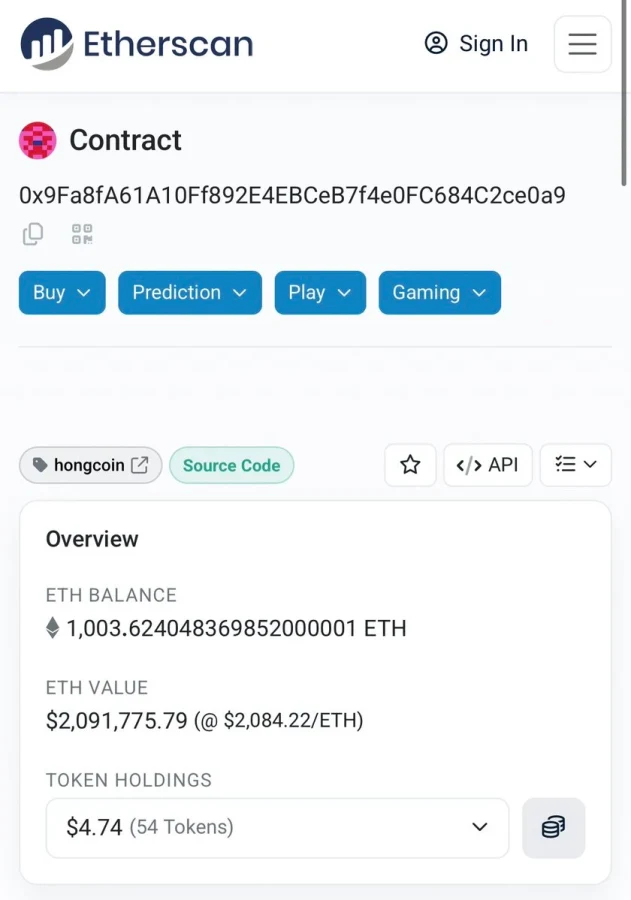
White hat Hacker Florent has recovered approximately 1,003 Ether worth nearly $2 million from a 2016 HongCoin ICO smart contract. The assets remained locked for almost nine years due to a coding flaw that prevented automated refunds, leaving investor funds frozen on the Ethereum network since the deployment phase.

The HongCoin ICO smart contract originally held the assets meant to be refunded to investors in the event that the project did not reach its fundraising target. Due to a Solidity coding error in the refund process, these funds became unclaimable, thus remaining locked in the smart contract deployed on Ethereum for almost a decade.

According to blockchain analytics and media reports, the white hat hacker identified a potential problem with the admin function inside an outdated Solidity code. Florent has then used this vulnerability to intervene in a responsible manner, as a white hat hacker, to unlock the frozen funds via resetting the balances inside the contract.

white hat exploit on Ethereum
Source: 0xFlorent’s X Post

Also Read | Toncoin Price Eyes $6.84 as Bullish Retest Sparks Hope for a Strong Rally

White Hat Hacker Successfully Unlocks Frozen ICO Assets

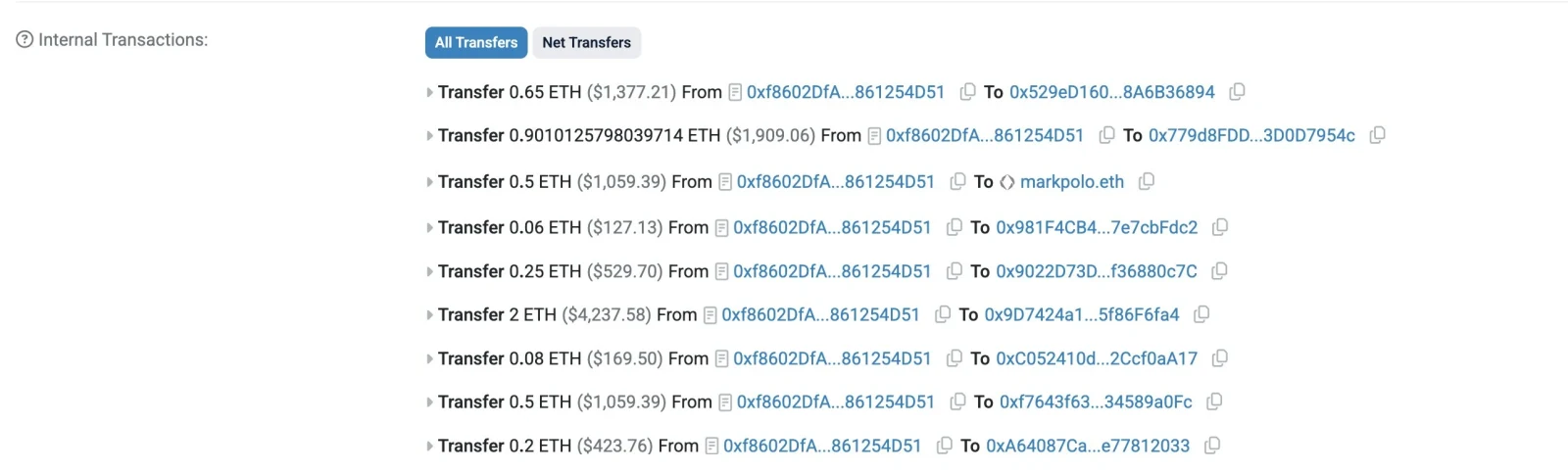
The funds locked in the ICO smart contract on Ethereum were unlocked through several signed transactions by original administrators, according to Etherscan data. More than 41 transactions were needed to unlock the locked assets in order to redistribute the funds to various investor addresses in accordance with final settlement procedures.

HongCoin investors received refunds for their initial investments in partial amounts, such as the return of 96 ETH to one investor. On-chain analysis showed that there were other smaller payouts made to the other participants. As a result of the hack by a white hat hacker, the funds were restored to investors gradually through the blockchain network.

Ethereum ICO Case Highlights Smart Contract Risks

While some investors chose to reward the white hat hacker for his efforts at a fair price, he had already gained much popularity within the community for his activities. He has previously helped recover 19.33 ETH in another similar incident regarding a failed ICO and cross-chain protocol, according to a recent post by 0xFlorent.

ETH transaction
Source: 0xFlorent’s X Post

The case underscores long-term risks associated with poorly designed smart contracts deployed during early ICO cycles, highlighting the importance of rigorous auditing and secure Solidity development standards. However, the role of white hat hackers in such cases can help restore these lost funds and contribute to improved blockchain ecosystem resilience.

Also Read | TRX Price Holds Key Support as Bulls Eye a Potential Rally Toward $3 Target

Filed Under: Cryptocurrency News

Strategy STRC Holds 11.50% Stretch Dividend Rate Steady for June 2026

By Ananthyka J | Edited By Sahana Kiran,June 1, 2026, 9:30 AM

Strategy STRC confirmed its Stretch Dividend Rate will stay at 11.50% for June 2026, based on a statement by Executive Chairman Michael Saylor. This notification sheds light on parties interested in this structured yield product of a digital asset company, considering the changing conditions of the cryptocurrency market.

Steady Rate Indicates Reliability

Keeping the 11.50% Stretch Dividend Rate is basically a reflection of Strategy STRC’s desire to offer a stable and reliable product within its $STRC system. When it comes to blockchain finance, yield structures that are consistent are under the constant surveillance of institutional investors who want their treasury management to be transparent

Strategy STRC
Source: SEC.gov

The unchanged figure for June 2026 provides predictability for counterparties modeling cash flow and risk. Strategy STRC operates within tokenized securities that merge traditional finance mechanisms with on-chain settlement, making rate stability a key metric amid broader DeFi volatility.

Also Read: Saylor Signals Strategy Bitcoin Buy as STRC Vote Nears

Market Context for Digital Asset Yields

Various yield-bearing crypto products are still quite popular as investors are constantly looking for risk-adjusted returns. Strategy STRC plays at the confluence of traditional capital structures and on-chain settlements, which gives it a niche position among regulated digital asset instruments.

Stretch Dividend Rate maintained at 11.50% for June 2026. $STRC pic.twitter.com/DZ55JRV1RV

— Michael Saylor (@saylor) June 1, 2026

Keeping the 11.50% rate while the broader blockchain sector deals with regulatory changes, liquidity cycles, and competition from DeFi-native yield platforms is the way forward. Market players frequently contrast such rates with staking rewards, tokenized yields of real-world assets, and corporate treasury strategies that involve holding bitcoins.

Also Read: Strategy Surpasses 800,000 Bitcoin as SEC Filing Confirms STRC Purchase Funding

Operational Considerations and Outlook

Having a constant dividend rate lessens unpredictability, yet the wide-ranging environment can be used for finding new opportunities as well as encountering problems. The number of public companies integrating blockchain technology is on the rise, yet macroeconomic factors and policy changes can also have a major bearing on capital allocation decisions.

Through its partnership with Strategy STRC, it shows how digital asset companies manage the competing interests of shareholders with realities of the market. The June 2026 rate maintenance is a definite reference point for evaluation, but the results will largely be governed by implementation, governance, and the state of the cryptocurrency exchanges and institutional custody networks.

Also Read: Strategy’s STRC: Unlocking Bitcoin’s Full Potential in 2026

Filed Under: DeFi, Cryptocurrency News

  • « Go to Previous Page
  • Page 1
  • Interim pages omitted …
  • Page 48
  • Page 49
  • Page 50
  • Page 51
  • Page 52
  • Interim pages omitted …
  • Page 3698
  • Go to Next Page »

Primary Sidebar

Recent Posts

  • JP Morgan Predicts $1.2T Equity Issuance Rise Due To AI Costs June 17, 2026
  • Bitmine Expands Ethereum Treasury With $35.85 Million ETH Acquisition June 17, 2026
  • Bitwise Hyperliquid ETF Surpasses 1 Million HYPE Tokens in Holdings June 17, 2026
  • OKX vs CZ: Explosive Clash Over Hyperliquid Compliance 2026 June 17, 2026
  • Telegram Ban: Durov vs Reliance Blocking Claims 2026 June 17, 2026

Footer

News

  • Latest News
  • Altcoin News
  • Bitcoin (BTC)
  • Blockchain
  • Tron (TRX)
  • World

Digest

  • Meet the Founder
  • Price Winning Article
  • DeFi
  • Cyber Security
  • Crypto Scam

Industry

  • Project Review
  • Technology
  • Fintech
  • Tron Exchange
  • New in Town

Tron Universe

  • Event and Tron Parties
  • New in Town
  • Tron Tokens

FOLLOW US

  • Facebook
  • Telegram
  • Twitter
  • Linkedin

Subscribe US

Editorial Policy | Privacy Policy | Disclaimer | Terms and Conditions | Masthead

Copyright © 2026 · Tron Weekly. All Rights Reserved. NOTE: Tron Weekly is an independent crypto news site that adheres to the strict journalism policy anchored on transparency, trust, and objectivity, we have no affiliation with the TRON Foundation, its founder Justin Sun or any other cryptocurrency firm.